
Speaking at CNBC TV 18's business leadership awards event, Sitharaman made it clear that she was not expecting a jump in the number either.

With cash -- the primary medium of exchange -- all but disappearing, it is now unlikely that the expected fillip to demand on account of a good monsoon and proceeds from the Seventh Pay Commission payout will materialise.

Chartered accountant and Sebi registered investment advisor, Harsh Vardhan Roongta, answers your home loan queries
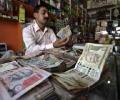
Don't waste the money on politically motivated social programmes.

'The government is using the agencies of the government to suppress the Opposition.'

This is one of the many such cases that helped to create an acute fear psychosis among public sector bankers, reveals Tamal Bandyopadhyay in his fascinating new book Pandemonium: The Great Indian Banking Tragedy.

IIM-B, professor R Vaidyanathan talks to Shobha Warrier about black money, Mudra Bank and Jaitley's Budget.

Raises cap of market share for merged entity to 50%, spectrum trading allowed, with riders.

Economic Affairs secretary S C Garg said inflation has consistently come down since 2014 and will not cross 4 per cent this fiscal.
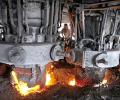
India's industrial output unexpectedly contracted 4.2 percent year-on-year in October, dragged down by a fall in the manufacturing and the capital goods sector, government data showed on Friday.

He said while the previous UPA government hid the bad loans, his government has properly recognised them and brought tough laws to deal with defaults and recovery money.


He assured the startups that both the banking system and the government will make the resources available to them

'It is strange a government that is bold and coercive has meekly chosen to do more of what has repeatedly failed to work in the past.' 'And sadly, rating agencies, the business community, fund managers, and analysts, who know this, have chosen to act as compulsive cheerleaders,' says Debashis Basu.

Practising Indira Gandhi's brand of socialism today will not just be anachronistic but also economically harmful.

'Chinese real GDP growth is 7.1% and India's is 7.4%'.

The government's Rs 20.97 lakh crore COVID-19 package lacks in addressing the immediate concerns of the economy as the actual fiscal impact of the additional stimulus is only about 1 per cent of the GDP as opposed to the claim of 10 per cent, Fitch Solutions said on Tuesday. Prime Minister Narendra Modi on May 12 announced a stimulus package of Rs 20 lakh crore, or nearly 10 per cent of GDP, to deal with the economic fallout of COVID-19. The contents of the package were broad-based and announced in five tranches.

The actual expenditure will only be marginally higher and hence, the multiplier effect will be muted.
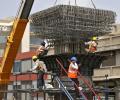
India's upbeat outlook contrasts with neighbouring China, where growth slipped to 6.7 in the first quarter

'The household sector, which is still the largest contributor of financial savings, has been experiencing a decline in the last six years, and it has fallen below 8% of GDP.'

Investors in LIC's insurance and other schemes are receiving a lower rate of return because LIC is subsidising incompetence at best and malfeasance at worst in institutions such as IDBI Bank and IL&FS, says Jaimini Bhagwati.
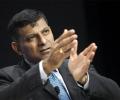
Former RBI governor Raghuram Rajan, who faced a stinging attack from Finance Minister Nirmala Sitharaman for presiding over the "worst phase" of the Indian banking sector, on Thursday reminded her that two-third of his tenure as the head of the central bank was under the Bharatiya Janata Party government.

Retired banker P Balagopala Kurup says one of the reasons he favours inflation targeting is that its first priority is to insulate the lesser fortunate citizens from adversity and in the process to ensure that the economy retains its inherent vibrancy and strength.

'This market is very expensive in some pockets, dirt cheap in some, and the belly of the market is reasonably valued.'

After exporters, real estate companies are demanding a priority sector tag for loans to the low-cost housing sector.
'India resembles not just the more turbulent bits of its own past, but other 'managed' democracies, where all institutional strength and independence have been hollowed out to serve political power,' notes Mihir S Sharma.
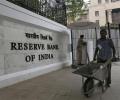
North Block and Mint Road seem likely to now stick to the earlier convention of the RBI governor coming to Delhi and being the only MPC member meeting the finance minister and senior bureaucrats on pre-policy meetings
'Unless we get the health and economic situations right at the same time, we will not recover.'

'The growth drivers are mostly invisible, but the growth is undeniable at least for now,' notes Debashis Basu.
Any return to 9-10%(economic) growth is some years away.

China's economy is in transition, with rising wage costs and massive overcapacity.

Here's what could be ahead for India: A $10-trillion economy by 2030-32, a Sensex at 1,00,000 by 2025, monthly GST revenues at Rs 2 trillion by 2024-25, 100 new unicorns by 2025, and poverty below 5 per cent by 2030, predicts R Jagannathan.
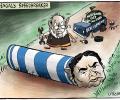
'Our government has created 10 million jobs when the Indian unemployment rate is at a 45-year high.'

'High denomination cash notes which was 1.4 lakh crores of Rs 500 and Rs 1,000 notes in 2004 became Rs 15.5 lakh crores in 2016.' 'If it had been allowed, by 2022, it would have been Rs 34 lakh crores, and that would have been the end of the Indian economy.' 'Demonetisation was a huge hit on the head of the economy, but without the hit, you could not U-turn the economy.'
Every housing finance company, and every bank with a large housing finance exposure, will see loss of volumes in this quarter.

'If businesses are focused on de-leveraging, they can hardly be investing. This is the price extracted by investment mistakes during UPA rule, and should have been foreseen. 'But Modi-I must share the blame, for muted reform of the financial sector, partisan policy in telecom, the harm done to exports by an over-priced rupee, and so on,' says T N Ninan.

The prime minister sought to allay slowdown concerns saying the fundamentals of the economy are strong, with low inflation and a potential to boost exports.

'The middle class you can hurt anytime. For revenues, politics, pleasure, anything,' notes Shekhar Gupta.
India is Asia's other bad debt headache.
Of the 40 CEOs polled from across the country, 60 per cent identified a fractured electoral mandate as a bigger risk than trade wars, volatile oil prices, and inflation.
 © 2026 Rediff.com - Advertise with us - Disclaimer - Privacy Policy - Sitemap - Feedback - About us - Terms of use - Grievances